Is the persistent pain from a bunion dictating your daily life, limiting your choice of footwear and turning simple activities like walking into a painful chore? If you are considering your next steps, understanding the options for bunion surgery in Middlesbrough is the first move towards regaining your comfort and mobility. The prospect of surgery can feel daunting, filled with questions about recovery, costs, and the procedure itself, but clarity and expert guidance can transform anxiety into confidence.
This comprehensive 2026 patient guide is designed to provide that clarity. We will explore the advanced surgical techniques available, including minimally invasive options, and detail what you can realistically expect from your recovery journey. Under the expert guidance of leading consultant Mr Ramsay Refaie at Mr Ramsay Refaie Foot and Ankle Surgeon, you will gain a clear understanding of the entire process, from initial consultation to returning to the activities you love. Our aim is to empower you to make an informed decision, paving the way for lasting relief and a return to life without foot pain.
Key Takeaways
- Understand the key signs that indicate it’s time to move beyond conservative treatments and consider a consultation for bunion surgery middlesbrough.
- Discover how modern bunion surgery middlesbrough focuses on correcting the underlying joint alignment for lasting relief, not just removing the visible bump.
- Demystify the recovery process with a realistic week-by-week timeline, so you know exactly what to expect as you return to your daily activities.
- Learn how a specialist’s patient-focused approach can make your journey, from initial consultation to post-operative care, feel clear and reassuring.
Understanding Bunions and When to Consider Surgery in Middlesbrough
Living with foot pain can significantly impact your daily life, from simple activities like walking to your choice of footwear. One of the most common sources of this discomfort is a bunion. While many people manage their symptoms with conservative measures, there comes a point where surgical intervention offers the most effective path to lasting relief. Understanding your condition and recognising when to seek a professional opinion is the first critical step toward regaining your mobility and comfort.
What is Hallux Valgus?
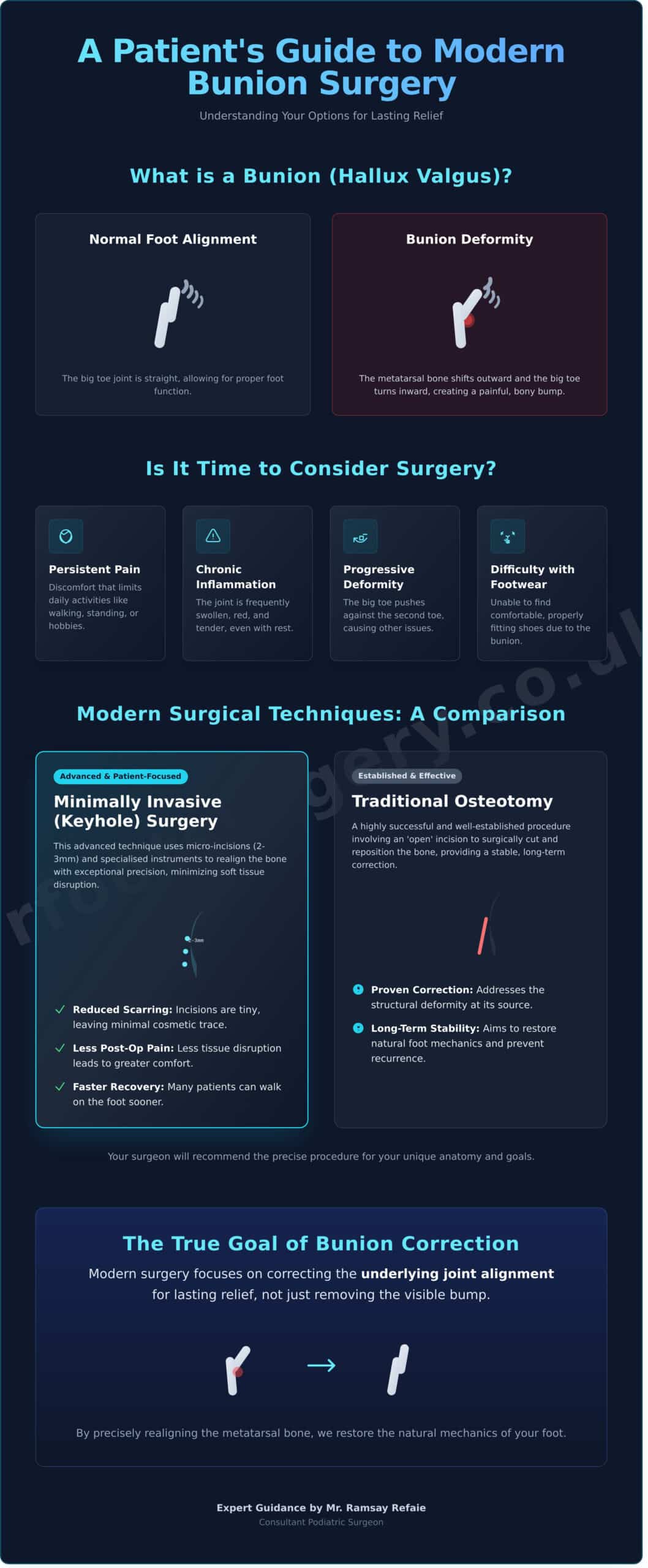
A bunion, known clinically as Hallux Valgus, is more than just a bump on the side of your foot. It is a progressive structural deformity of the joint at the base of the big toe. To understand the condition in greater detail, it’s helpful to know what a bunion is at a mechanical level. Essentially, the long bone in your foot (the first metatarsal) shifts outward, and the big toe (the hallux) deviates inward, toward the smaller toes. This misalignment creates the characteristic bony prominence. This condition is often influenced by genetics and foot structure, though it can be aggravated by constrictive footwear.
Signs You May Need Bunion Surgery
Non-surgical options like wider shoes, padding, or orthotic devices can provide temporary relief, but they do not correct the underlying joint misalignment. When these measures are no longer effective and your quality of life is compromised, it may be time to discuss the possibility of bunion surgery in Middlesbrough with a specialist. Key indicators include:
- Persistent Pain: Discomfort that limits your daily activities, such as walking, standing for long periods, or participating in hobbies.
- Chronic Inflammation: The joint at the base of the big toe is frequently swollen, red, and tender, even with rest or anti-inflammatory medication.
- Progressive Deformity: The big toe is pushing against the second toe, potentially causing secondary issues like hammertoes, corns, or calluses.
- Difficulty with Footwear: You are unable to find comfortable, properly fitting shoes, forcing you to choose footwear based on what accommodates the bunion rather than what you prefer.
If these symptoms resonate with your experience, a professional evaluation is the most logical next step. A consultation with a podiatric surgeon provides a definitive diagnosis and a clear, personalised treatment plan tailored to your specific needs and lifestyle goals.
Modern Bunion Surgery Techniques Available in the Tees Valley
The goal of modern bunion correction is far more sophisticated than simply removing the visible bump. True, long-lasting relief comes from addressing the root cause: the structural misalignment of the metatarsal bone in your foot. The specific surgical technique chosen is therefore not a one-size-fits-all solution; it is meticulously selected based on your unique anatomy, the severity of the bunion, and your lifestyle goals.
When you are considering bunion surgery in Middlesbrough, it’s essential to understand the difference between traditional ‘open’ procedures and advanced minimally invasive techniques. Mr. Refaie possesses extensive experience in both approaches, allowing him to conduct a thorough assessment and recommend the precise procedure that will deliver the most stable and effective outcome for you.
Minimally Invasive (Keyhole) Bunion Surgery
This advanced technique, often referred to as keyhole surgery, utilises several very small incisions (typically just 2-3mm long). Through these micro-incisions, specialised instruments are used to cut and realign the bone with exceptional precision. The primary patient benefits are significant:
- Reduced Scarring: Incisions are so small they often require no stitches and leave minimal cosmetic trace.
- Less Post-Operative Pain: With less disruption to the surrounding soft tissue, patients generally experience greater comfort during recovery.
- Potentially Faster Recovery: Many patients can walk on the foot sooner than with traditional open surgery.
Ideal candidates for minimally invasive surgery are determined during your consultation, based on factors like the degree of deformity and bone quality.
Osteotomy: Realigning the Bone
An osteotomy is the clinical term for the surgical cutting and repositioning of a bone to correct a deformity. This is the foundational step in most bunion correction procedures. By precisely realigning the metatarsal bone, we restore the natural mechanics of your foot and prevent the bunion from recurring. This approach is a well-established and highly effective method, consistent with NHS guidelines on bunion surgery, for providing long-term relief.
Common, highly successful techniques include the Scarf and Akin osteotomies, which are chosen based on the specific angle of your joint. You can feel confident that this is a standard, meticulously planned procedure designed to give you a stable, straight, and functional big toe joint for years to come.
Your Patient Journey with Mr. Refaie in Middlesbrough
Deciding to proceed with bunion surgery is a significant step, and it is natural to feel apprehensive. At our clinic, we prioritise clarity and reassurance, ensuring you feel informed and supported from your very first enquiry. Mr. Refaie provides dedicated, one-to-one consultant-led care, guiding you through a structured and transparent journey to relieve your pain and restore your mobility right here in the Tees Valley.
The Initial Consultation
Your journey begins with a comprehensive consultation at one of our Middlesbrough-area clinics. This appointment is a dedicated time to establish a clear diagnosis and build a treatment plan tailored specifically to you. During this session, you can expect:
- A thorough physical examination of your foot and assessment of your gait.
- On-site X-rays to precisely evaluate the alignment of the bones and the extent of the joint deformity.
- A detailed discussion about your symptoms, your lifestyle, and the impact the bunion has on your daily activities.
Mr. Refaie will explain the clinical findings in detail, helping you understand the specifics of your condition. For a trusted overview, you can also learn more about bunions from the NHS. This is your opportunity to ask any questions and collaboratively decide on the best surgical approach to meet your personal goals.
Preparing for Your Surgery
Once you have decided to move forward with bunion surgery in Middlesbrough, our team will coordinate all necessary preparations. We provide clear guidance on pre-operative assessments to ensure you are medically ready for the procedure. Most modern bunion corrections are performed as day-case procedures under local anaesthetic with sedation, meaning you can return home the same day to recover in comfort. We will provide a detailed plan for the day of your surgery at Tees Valley Hospital, covering everything from admission times to what to bring, ensuring your experience is as smooth and stress-free as possible.
Bunion Surgery Recovery: A Realistic Week-by-Week Timeline
One of the most common questions we address concerns the recovery period. Understanding what to expect after your procedure is key to a smooth and successful outcome. While every patient’s journey is unique, modern surgical techniques, including the minimally invasive approaches we specialise in at RR Foot Surgery, often allow for a more manageable and predictable recovery. Adhering to your personalised post-operative plan is the single most important factor in achieving lasting relief and mobility.
The First Two Weeks: Rest and Elevation
The initial fortnight is dedicated to healing. Your primary focus will be on rest and managing swelling. You will be provided with a special post-operative shoe, which allows for limited, protected weight-bearing. The guiding principle is simple: keep your foot elevated above the level of your heart as much as possible. We will schedule a follow-up appointment at our clinic, typically around two weeks after your surgery, to check the wound, remove sutures if necessary, and ensure your recovery is on track.
Weeks 2-6: Gradual Return to Activity
During this phase, you will transition from the surgical shoe to a comfortable, wide-fitting trainer. This marks a significant step towards regaining your independence. We will introduce a series of gentle physiotherapy exercises designed to restore your foot’s range of motion and strength. For patients undergoing bunion surgery middlesbrough with sedentary jobs, a return to desk work is often possible within 2-4 weeks. Driving can typically resume around 4-6 weeks, once you can comfortably perform an emergency stop without pain.
Beyond 6 Weeks: Getting Back to Normal
From six weeks onwards, you can begin to reintroduce more of your normal activities. The focus shifts from healing to rehabilitation. Key milestones include:
- Return to Low-Impact Exercise: Activities like swimming and cycling are usually permitted from 6-8 weeks.
- Higher-Impact Sports: A return to running and more strenuous sports is generally possible from three months, following a gradual build-up.
- Swelling Reduction: While the majority of swelling subsides within the first few months, some residual swelling can persist for up to a year as your foot settles into its new, corrected position.
Choosing supportive, well-fitting footwear is crucial for protecting your surgical result long-term. Your dedicated care plan at RR Foot Surgery will provide detailed guidance, ensuring you have the expert support needed to return to the lifestyle you love.
Why Choose Mr. Ramsay Refaie for Your Bunion Surgery?
Choosing a surgeon for your procedure is a significant decision. When considering bunion surgery middlesbrough, you need a specialist who combines exceptional surgical skill with a genuine commitment to your personal outcome and well-being. Mr. Ramsay Refaie is a Consultant Trauma & Orthopaedic Surgeon whose practice is dedicated exclusively to treating foot and ankle conditions, offering patients across the Tees Valley a trusted and highly specialised path to recovery.
His patient-focused approach is centred on clear communication and shared decision-making, ensuring you feel confident and informed at every stage of your treatment journey.
Specialist Expertise in the Tees Valley
As a substantive NHS consultant at South Tees Hospitals NHS Foundation Trust, Mr. Refaie brings a wealth of experience to his private practice. His entire focus is on the intricate mechanics of the foot and ankle, allowing for a level of expertise that is essential for complex procedures like bunion correction. By choosing Mr. Refaie, you gain access to:
- A Dedicated Specialist: A surgeon whose professional life is devoted to mastering foot and ankle surgery, from initial diagnosis to post-operative care.
- Advanced Surgical Techniques: A commitment to using modern, evidence-based techniques designed to optimise results, reduce recovery time, and restore function.
- Premium Local Facilities: Procedures are performed at leading private hospitals like Tees Valley Hospital, providing a comfortable, safe, and professional environment for your care.
Booking Your Consultation
Taking the first step towards pain-free feet is straightforward. A private consultation with Mr. Refaie is the ideal opportunity to receive a thorough assessment, discuss your symptoms and lifestyle goals, and understand the treatment options available to you. We welcome both self-paying patients and those with private medical insurance.
Your journey back to comfort and mobility begins with a conversation. We are here to provide the clarity and expert guidance you need to make a confident decision about your health. To arrange your appointment and explore how Mr. Refaie can help you, please take the next step.
Schedule your consultation with Mr. Refaie today.
Take the First Step Towards Relief from Bunion Pain
Living with the daily discomfort of a bunion is not a necessity. As we have explored, significant advancements in surgical procedures offer lasting relief, and a carefully planned patient journey ensures you are supported from diagnosis through to full recovery. Understanding the modern techniques available and the realistic recovery timeline is the foundation for a confident decision about your health.
When considering bunion surgery middlesbrough, choosing a surgeon with dedicated expertise is paramount. With over 15 years of consultant experience, Mr. Ramsay Refaie specialises in the modern, minimally invasive techniques discussed, performed at leading private hospitals in the Tees Valley. This ensures you not only receive world-class clinical care but also a personal, reassuring experience.
Your journey towards a pain-free life begins with expert advice. Book Your Private Consultation in Middlesbrough or Darlington to explore your options with Mr. Refaie. Taking this decisive step is the start of reclaiming your comfort and returning to the activities you love.
Frequently Asked Questions About Bunion Surgery
How long does bunion surgery take?
Bunion correction is typically performed as a day-case procedure, meaning you can return home the same day. The surgery itself is relatively quick, usually lasting between 30 and 60 minutes. The exact duration depends on the complexity of the deformity and the specific surgical technique, such as a scarf osteotomy or a minimally invasive approach, which will be determined during your initial consultation. Your surgical team will ensure you are comfortable throughout the process.
Is bunion surgery very painful?
Post-operative discomfort is a normal part of the healing process, but it is managed proactively. During the procedure, a long-acting local anaesthetic is used to numb the area, providing significant pain relief for the first 12-24 hours. Afterwards, you will be prescribed a course of oral painkillers to ensure your recovery is as comfortable as possible. Our goal is to control discomfort effectively so you can focus on resting and healing properly.
When can I walk normally after bunion surgery?
You will be able to walk on your heel in a special surgical shoe immediately after the operation. This protective shoe is typically worn for four to six weeks. A gradual return to normal walking in supportive footwear, like trainers, begins after this period. While most patients are back to light daily activities within a few weeks, returning to completely normal, unrestricted walking and more demanding activities can take three to six months as your foot fully recovers.
Will my bunion come back after surgery?
The risk of a bunion recurring after modern surgical correction is low. Advanced techniques are designed to correct the underlying structural deformity of the foot, not just the cosmetic bump, which provides a lasting solution. Following your post-operative instructions carefully, particularly regarding appropriate footwear choices, is crucial for minimising the chance of recurrence and ensuring the long-term success of your procedure and the health of your feet.
How much does private bunion surgery cost in the Middlesbrough area?
The cost of private bunion surgery can vary depending on the specific procedure required and the hospital chosen for your operation. A typical guide price for a comprehensive package, which includes the consultation, surgical fees, anaesthetist fees, and follow-up care, generally starts from around £4,500. For a precise and personalised quote for your bunion surgery Middlesbrough, we recommend scheduling a consultation where your specific needs can be fully assessed.
Do I need a referral from my GP to see Mr. Refaie?
While a referral from your GP is often helpful, particularly if you are using private medical insurance, it is not always a requirement. We welcome self-referrals from patients who wish to book a consultation directly. If you are planning to use your insurance, we advise checking with your provider first, as they may require a GP referral letter to authorise your treatment. Our administrative team can guide you through this process.
Can both feet be operated on at the same time?
Operating on both feet simultaneously is generally not recommended. The recovery from bunion surgery requires a period of limited weight-bearing to protect the corrected bone, and managing this on both feet at once would severely restrict your mobility. Staging the procedures-operating on one foot at a time-ensures a safer and more manageable recovery, allowing you to remain independent while the first foot heals before addressing the second.
What are the risks or potential complications of bunion surgery?
All surgical procedures carry some level of risk, though complications with bunion surgery are uncommon. Potential risks include infection, nerve irritation, stiffness in the big toe joint, slow bone healing, or deep vein thrombosis (DVT). During your consultation, Mr. Refaie will discuss these potential complications with you in detail, ensuring you have a complete understanding and can make an informed decision. Meticulous surgical technique helps to minimise these risks significantly.